

Find Reliable Meeting Table and Chairs Set Factories for Your Business Needs
Finding the Right Meeting Table and Chairs Set Factories: A Comprehensive Guide
Sourcing high-quality meeting table and chairs sets requires careful consideration. The global market offers numerous factories, but identifying reliable partners delivering consistent quality and competitive pricing is crucial. This article will guide you through the key factors to consider when choosing a meeting table and chairs set factory, covering aspects from manufacturing capabilities to quality control and logistical considerations. We aim to provide insights that help you make informed decisions and secure a stable supply chain for your business.

Key Considerations When Selecting a Factory
Choosing the right factory isn't just about price; it’s about building a long-term partnership. First, assess the factory's manufacturing capabilities. Do they have the equipment and expertise to produce the specific types of tables and chairs you need – whether it’s wood, metal, plastic, or a combination? Second, evaluate their quality control processes. A robust quality control system is essential to ensure consistent product standards. Third, consider their production capacity and lead times. Can they meet your order volumes and delivery schedules? Finally, check their certifications and compliance with relevant industry standards. A reputable factory will readily provide documentation verifying their adherence to quality and safety regulations.
Key Highlights: Look for factories with specialized equipment, stringent quality control, adequate production capacity, and relevant certifications.
Evaluating Factory Capabilities: Materials and Production Processes
Different meeting table and chairs set factories specialize in different materials and production techniques. Some may excel in solid wood construction, while others focus on metal framing and molded plastic seats. Understanding these specializations is key to finding a factory that aligns with your product requirements. Look for factories that employ skilled craftsmen and utilize modern manufacturing equipment. Also, inquire about their finishing options – such as painting, staining, or powder coating – to ensure they can deliver the desired aesthetic.
Material and Process Considerations:
• Woodworking expertise (solid wood, veneers)
• Metal fabrication capabilities (steel, aluminum)
• Plastic molding and finishing options
• Finishing processes (painting, staining, powder coating)
Comparing Meeting Table and Chairs Set Factories: A Feature Breakdown
Selecting the best meeting table and chairs set factory requires a thorough comparison. Consider factors such as minimum order quantity (MOQ), pricing structure, payment terms, and shipping options. A factory with flexible MOQs can be beneficial for smaller businesses, while competitive pricing is essential for maintaining profitability. Transparent payment terms and reliable shipping arrangements ensure a smooth transaction process. Here's a table comparing key features of potential factory partners:
Quality Control and Assurance: Ensuring Product Excellence
A robust quality control process is non-negotiable. Factories should implement quality checks at every stage of production, from raw material inspection to final product testing. This includes verifying dimensions, assessing structural integrity, and evaluating surface finishes. Ask about the factory’s quality control procedures and request samples for inspection before placing a bulk order. Look for factories that have obtained certifications like ISO 9001, which demonstrates their commitment to quality management.
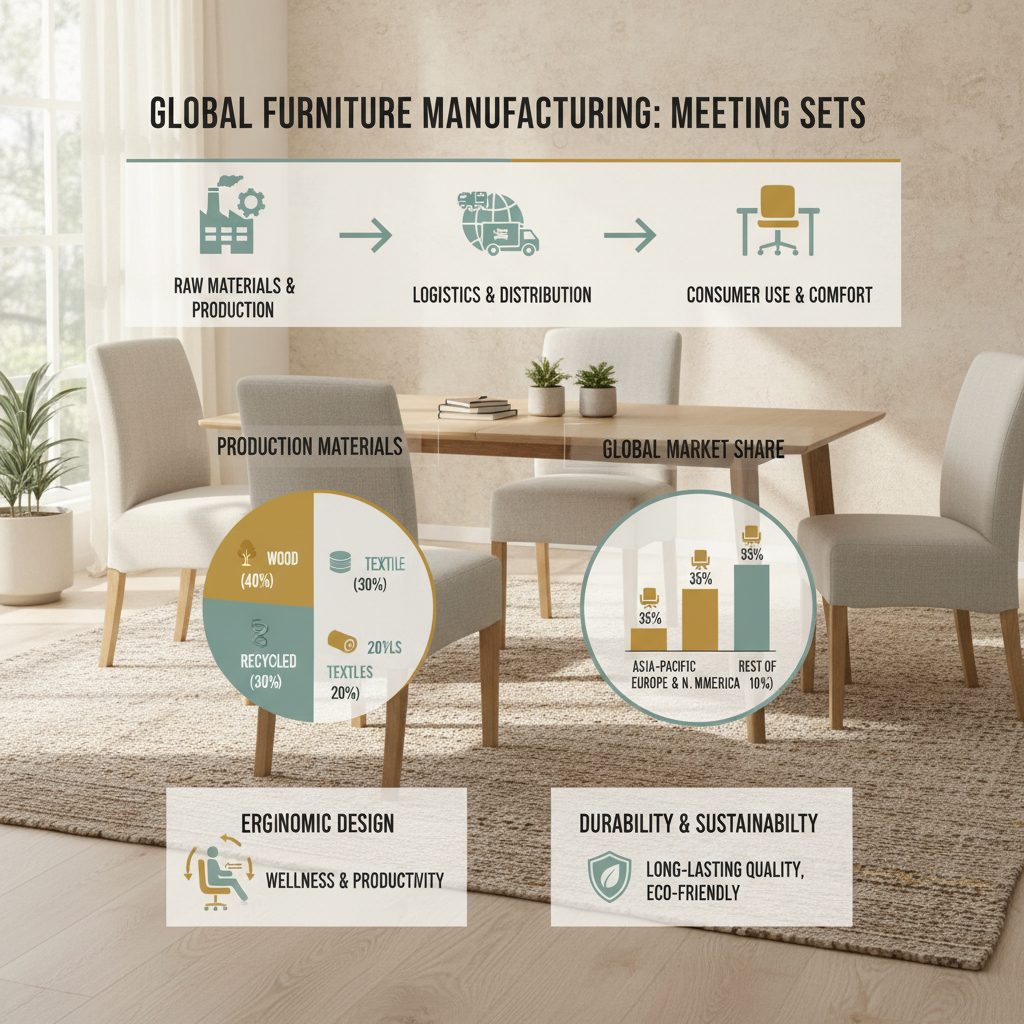
Logistics and Shipping: Getting Your Products Delivered
Efficient logistics and shipping are crucial for timely delivery. Discuss shipping options with the factory and consider factors such as cost, transit time, and insurance. Ensure the factory has experience handling international shipments and can provide the necessary documentation for customs clearance. Clear communication and proactive tracking are essential to avoid delays and ensure a smooth shipping process. Laining Global offers comprehensive logistics solutions to streamline your supply chain.
Conclusion: Partnering for Success
Choosing the right meeting table and chairs set factory is a critical decision that impacts your business's success. By carefully evaluating their capabilities, quality control processes, and logistics arrangements, you can secure a reliable supply of high-quality products at competitive prices. A strong partnership with a reputable factory will contribute to long-term growth and customer satisfaction.
Frequently Asked Questions (FAQs)
What is the typical lead time for a custom order?
Lead times vary depending on the complexity of the order, the factory's production schedule, and shipping distance. Generally, custom orders require 30-60 days for production, plus additional time for shipping. It’s crucial to confirm the lead time with the factory before placing an order, and to factor in potential delays due to unforeseen circumstances. Providing clear specifications and timely approvals can help expedite the process.
What payment terms are typically offered by these factories?
Common payment terms include a 30% deposit upon order confirmation, with the remaining 70% paid before shipment. Some factories may offer letter of credit (L/C) as a payment option, especially for large orders. It’s essential to negotiate payment terms that are mutually agreeable and to ensure secure payment methods are used. Avoid making full upfront payments to unfamiliar factories.
How can I verify the quality of products before placing a bulk order?
Requesting samples is the most effective way to verify quality. Inspect the samples carefully, paying attention to materials, construction, and finishes. You can also consider engaging a third-party inspection service to conduct a more thorough assessment of the factory's quality control processes and product quality. Laining Global provides quality inspection services to ensure your satisfaction.
share:
-
Comprehensive Meeting Table and Chairs Set Pricelist for Your Office SpaceNewsMar.31,2026
-
Find Reliable Meeting Table and Chairs Set Suppliers for Your BusinessNewsMar.26,2026
-
Comprehensive Meeting Table and Chairs Set Factory Sourcing Solutions WorldwideNewsMar.24,2026
-
Choosing the Best Ergonomic Office Recliner Chair Company for Your WorkplaceNewsMar.21,2026
-
Find Top Ergonomic Office Recliner Chair Manufacturers For Your BusinessNewsMar.19,2026
-
Invest in Comfort and Health with Ergonomic Office Recliner Chair ProductsNewsMar.17,2026
-
Boost Workplace Wellness with Premium Ergonomic Office Recliner Chair ServiceNewsMar.14,2026
 English
  Arabic
  Belarusian
  Danish
  Dutch
Dutch  Finnish
  French
  German
  Greek
Greek  Icelandic
  Italian
  Japanese
  Korean
  Latin
Latin  Polish
  Portuguese
  Russian
  Spanish
  Swedish
  Thai
Thai