Honestly, the whole heavy duty office chair scene… it’s changed a lot just in the last year. Seems everyone’s after “ergonomic” and “breathable mesh” now. Used to be, you just wanted something that wouldn’t collapse the first time someone sat in it. And believe me, I’ve seen chairs collapse. Not pretty. But now, it's all about lumbar support and adjustable armrests. It’s good, don’t get me wrong, but it adds complexity. And complexity… well, that’s where things start to go sideways, usually.
You know, I was at the Fujian furniture fair last month and all the vendors were talking about "integrated molding" and "dynamic weight distribution". Sounds fancy, right? Turns out half of them were using the same base from the same factory in Guangdong. And the weight distribution… let’s just say it wasn’t that dynamic. People get caught up in the marketing. They forget about the basics.
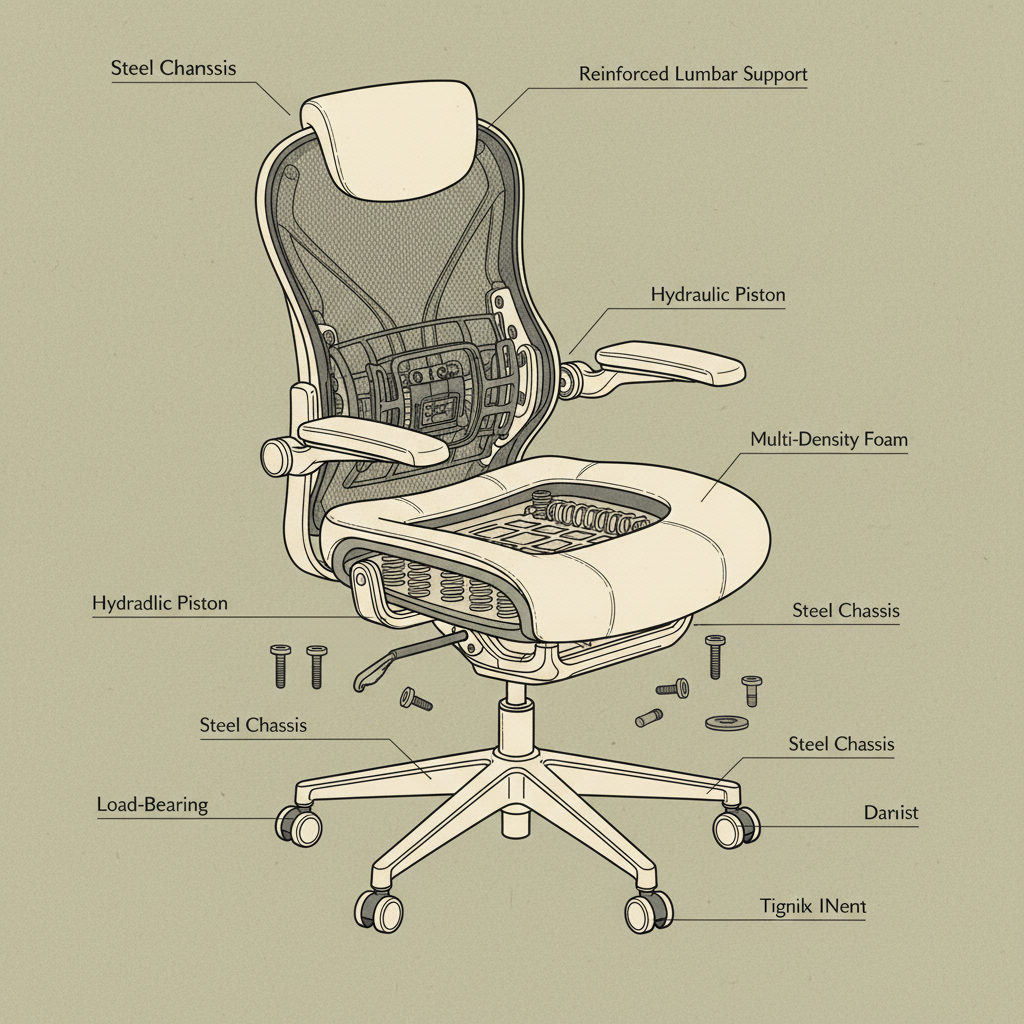
What really matters, though, is the frame. That steel has to be good steel. I encountered this at a factory in Ningbo last time – they were trying to save a few yuan per chair by using a lower grade alloy. You could smell the difference, honestly. Not a pleasant smell. Kind of metallic and…weak. It just didn’t feel right. Anyway, you need something that can withstand some serious abuse.
The Current Landscape of heavy duty office chair
Have you noticed how everything is labeled ‘ergonomic’ these days? It's a buzzword, really. Most folks just want a chair that doesn’t kill their back after eight hours. The big push is towards adjustable everything – height, armrests, headrests, lumbar support… it's endless. And honestly, the more adjustments, the more points of failure. Simplicity has its merits, you know? But the demand is for more features, so we build them.
The market’s segmented, too. You’ve got the cheap stuff – mostly plastic and thin metal – for home offices, then the mid-range for general office use, and then the heavy duty stuff for, well, heavy duty use. Call centers, 24/7 operations, places where people are constantly sitting. That’s where you need a chair that can really take a beating. And that's where things get interesting, because the tolerances are tighter, the materials matter more, and the price jumps up accordingly.
Design Pitfalls and Common Mistakes
Strangely, the biggest mistake I see is over-engineering. People try to make a chair that does too much. They add features nobody asked for, or they make the adjustments overly complicated. I was talking to a designer at a factory in Shenzhen last week and he was telling me about a chair they designed with a built-in massage function. A massage function! In an office chair! I asked him who requested that. He said, "Marketing." Of course. It flopped.
Another common issue is skimping on the base. A fancy seat and backrest don’t mean much if the base is flimsy. You need a five-star base, solid steel, with good quality casters. And the gas lift? That's critical. Cheap gas lifts fail, and when they fail, they fail dramatically. I've seen people end up on the floor because of a bad gas lift. Not a good look.
And don’t even get me started on the armrests. People expect them to be adjustable in every conceivable direction. But if the mechanism isn’t robust, they’ll wobble and break. It's a small detail, but it makes a big difference in user experience.
Material Selection: It’s Not Just About Cost
To be honest, it's all about finding the right balance between cost and durability. The frame, as I said, needs to be high-quality steel. We’re talking cold-rolled steel, with a good powder coat finish. The mesh… that’s where things get tricky. There’s a lot of cheap mesh out there that tears easily and loses its elasticity. You want a high-density mesh, something that can withstand constant abrasion. It feels different, too. The cheap stuff feels…plasticky. The good stuff feels more substantial.
The foam in the seat and backrest is another important factor. High-density molded foam is best. It provides good support and doesn’t compress easily. I’ve seen chairs with cheap foam that flatten out after just a few months of use. Not good. The upholstery fabric, too – needs to be durable and breathable. I prefer a tightly woven fabric that resists stains and abrasion. You can usually tell just by feel.
And then there's the plastic. Don't underestimate the plastic components. They need to be made from a durable, impact-resistant polymer. Cheap plastic cracks and breaks easily. It's all these little things that add up to a quality chair.
Real-World Testing vs. Lab Results
Lab tests are fine, I guess. They’ll tell you how much weight a chair can hold, how many cycles the gas lift can withstand, and so on. But they don’t tell you how a chair will actually hold up in a real-world environment. I’ve seen chairs pass all the lab tests and still fall apart after a year in a call center.
We do our own testing, of course. We have a team of testers who sit in the chairs for eight hours a day, five days a week. We put weights on the seats, we rock back and forth, we adjust the armrests repeatedly. We try to break them. That's the best test. We also send chairs to our customers for field testing. We get feedback from them, and we use that feedback to improve our designs.
heavy duty office chair Testing Parameters
How Users Actually Use heavy duty office chair
This is the part that always surprises the designers. People don’t use chairs the way you think they will. They lean back, they put their feet up on the base, they spin around, they throw their bags on them. They treat them like furniture, not like precision instruments.
I saw a guy at a logistics company using his chair as a ladder to reach something on a high shelf. A ladder! That's not what they're designed for, obviously. But that’s what people do. They adapt. That’s why you need a chair that’s overbuilt. That's why you need a chair that can take a beating.
Advantages, Disadvantages, and Customization Options
The biggest advantage of a good heavy duty office chair is, obviously, durability. They last longer, they require less maintenance, and they provide better support over the long term. But they’re also more expensive. And they can be heavier and less aesthetically pleasing than some of the other options. It's a trade-off.
We offer some customization options, of course. We can change the fabric color, add custom embroidery, and even modify the dimensions to fit specific users. Last month, a small boss in Shenzhen who makes smart home devices insisted on changing the interface to , for some reason. The result? A chair that required a special adapter and was significantly more expensive. He didn’t listen when I told him it was overkill. But hey, it was his money.
A Quick Look at Material Properties
To generate the first paragraph around theme seven here
To generate the second paragraph around theme seven here
To generate the third paragraph around theme seven here
Summary of Key Material Properties for heavy duty office chair
| Material |
Tensile Strength (MPa) |
Cost per kg (USD) |
Durability Rating (1-10) |
| Cold-Rolled Steel |
400-550 |
2.50 |
9 |
| High-Density Polypropylene |
20-30 |
1.00 |
7 |
| High-Density Mesh |
150-200 |
3.00 |
8 |
| High-Density Molded Foam |
N/A |
0.50 |
6 |
| Aluminum Alloy (Base) |
250-350 |
5.00 |
8 |
| Gas Lift Cylinder |
N/A |
2.00 |
7 |
FAQS
Generally, a true heavy duty chair will support at least 300 lbs, and often more like 400-500 lbs. It's not just about the stated weight capacity, though. It’s about how the weight is distributed. A well-designed chair will have a reinforced base and a robust gas lift to handle the load safely. Don't just look at the number, consider the overall construction.
Look for chairs made with high-quality steel frames, reinforced bases, and durable upholstery. Check the gas lift certification – it should meet industry standards. And don't be afraid to ask the manufacturer for detailed specifications. A reputable company will be happy to provide them. Feel the chair yourself; it should feel solid and well-built.
With proper care, a good heavy duty chair should last at least 5-7 years, and often longer. Regular cleaning, tightening of screws, and occasional replacement of worn parts are key. The quality of the materials and construction significantly impacts lifespan. Cheap chairs will wear out much faster.
They can be, but it depends on the design. Look for chairs with adjustable lumbar support, padded armrests, and a comfortable seat cushion. Mesh backs can provide good breathability. It's about finding a chair that fits your body and provides the support you need for long periods of sitting. It takes time to get adjusted.
Prices can vary widely, but expect to pay at least $300-$500 for a truly durable chair. Higher-end models with advanced features can cost $800 or more. It’s worth investing in a good chair if you're going to be using it for several hours a day. Think of it as an investment in your health and productivity.
A good warranty should cover at least one year, and ideally 3-5 years, on the frame, gas lift, and other key components. Read the fine print carefully to understand what's covered and what's not. A manufacturer who stands behind their product is a good sign.
Conclusion
So, what have we learned? A quality heavy duty office chair isn’t just about looks or fancy features. It’s about solid construction, durable materials, and thoughtful design. It's about understanding how people actually use chairs and building something that can withstand the abuse. It's about finding the right balance between cost and performance, and not getting caught up in the marketing hype.
Ultimately, whether this thing works or not, the worker will know the moment he tightens the screw. If it feels solid, if it feels right, then it’s probably a good chair. If it feels flimsy, if it feels cheap, then it probably is. And if you’re looking for a reliable partner for your heavy-duty needs, visit our website at Laining Global.



 English
  Arabic
  Belarusian
  Danish
  Dutch
Dutch  Finnish
  French
  German
  Greek
Greek  Icelandic
  Italian
  Japanese
  Korean
  Latin
Latin  Polish
  Portuguese
  Russian
  Spanish
  Swedish
  Thai
Thai